
Hibiscus Tree
Hibiscus trees, commonly known as Rose of Sharon, are upright, woody shrubs trained into tree form. They are grown for their large hibiscus flowers, which bloom in summer and add height and structure to sunny landscapes.
-
Hibiscus 'Red Heart' Rose of Sharon Tree Form
Regular price $74.95Regular priceUnit price per$74.95Sale price $74.95Sold out
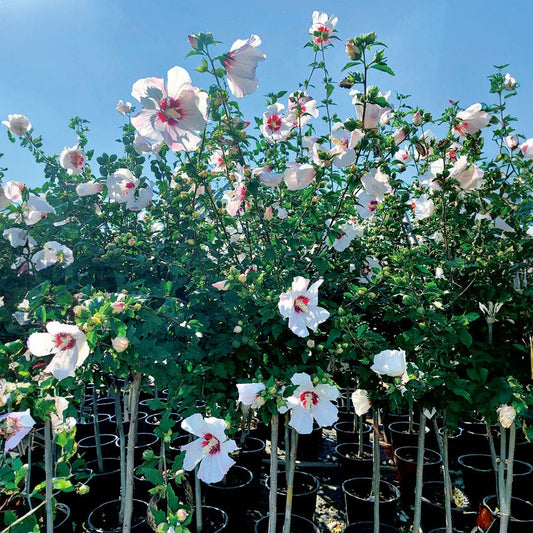
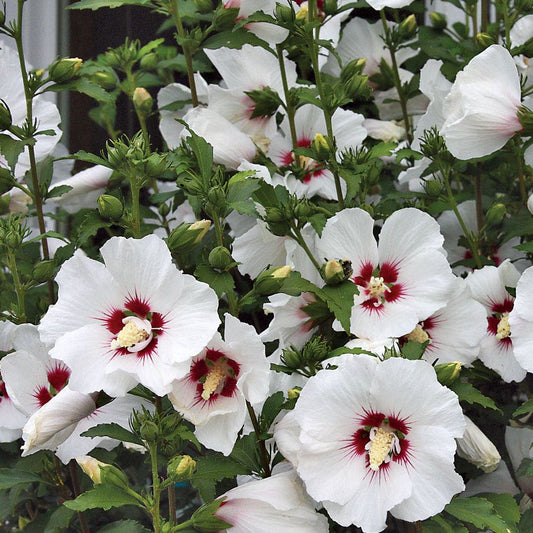
Hibiscus Tree
Upright Flowering Trees With Summer Blooms
Hibiscus trees produce large, open flowers on a woody, tree-like framework. Blooming begins in mid to late summer, when many other shrubs have finished flowering. Flower colors vary by variety and may include white, pink, lavender, purple, or bi-color patterns.
Often sold as a single-stem or multi-stem form, hibiscus trees provide height and seasonal color in gardens and landscapes.
How Tall Do Hibiscus Trees Get?
Most hibiscus trees reach between 8 and 12 feet tall at maturity, with a spread of 4 to 6 feet. Growth rate is moderate, and plants can be maintained at a smaller size with regular pruning.
How to Care for a Hibiscus Tree
Hibiscus trees grow best in full sun and well-drained soil. Water regularly during the first growing season to help establish roots, then water as needed during dry periods. Once established, they tolerate heat well and need only routine care.
Applying mulch around the base helps retain soil moisture and protect roots during temperature extremes.
How to Prune a Hibiscus Tree
Prune hibiscus trees in late winter or early spring, before new growth begins. Flowers form on new wood, so pruning encourages fresh growth and heavier blooming.
Remove dead or crossing branches and shape the canopy to maintain the desired tree form. Avoid heavy pruning later in the season, which can reduce flowering.
Garden Uses for Hibiscus Trees
Hibiscus trees work well as focal points, patio accents, or along walkways where their upright form and summer flowers can be easily enjoyed. Their late bloom time makes them a valuable addition to landscapes that need color later in the season.